Table of contents
From NewJeans’ virtual concert in League of Legends to Fortnite’s record-breaking Travis Scott show, in-game events have become one of entertainment’s most bankable formats, and one of its most surprising social engines. What starts as a timed mission, a live reveal, or a limited cosmetic drop increasingly spills into group chats, local meetups, and packed watch parties. Behind the spectacle sits a quieter shift in how communities form, and why games now rival venues, campuses, and clubs as gathering places.
When the timer hits zero, people show up
Why do players rearrange their evening for something that vanishes in minutes? Scarcity is part of the answer, but scale and simultaneity matter just as much. Epic Games said more than 12 million players attended the live in-game Travis Scott event in Fortnite in April 2020, and the company later reported that Ariana Grande’s “Rift Tour” in 2021 drew 78 million attendees across multiple showings. Those numbers are not just marketing flexes, they describe a basic social fact: when an event is synchronized, millions experience the same beat at once, and that shared reference point is the raw material of community.
In established esports ecosystems, the mechanism is even clearer. Riot Games has repeatedly used its biggest moments, Worlds broadcasts, champion updates, and narrative “season” resets, as coordinated rituals for a global audience. Worlds 2023 peaked at 6.4 million concurrent viewers, according to Esports Charts, a figure that underscores how competitive games create appointment viewing on par with traditional sports in some demographics. The spillover into real life is measurable in watch-party culture, in the growth of student esports clubs, and in the way sports bars and cafés now program finals weekends the way they once booked boxing nights.
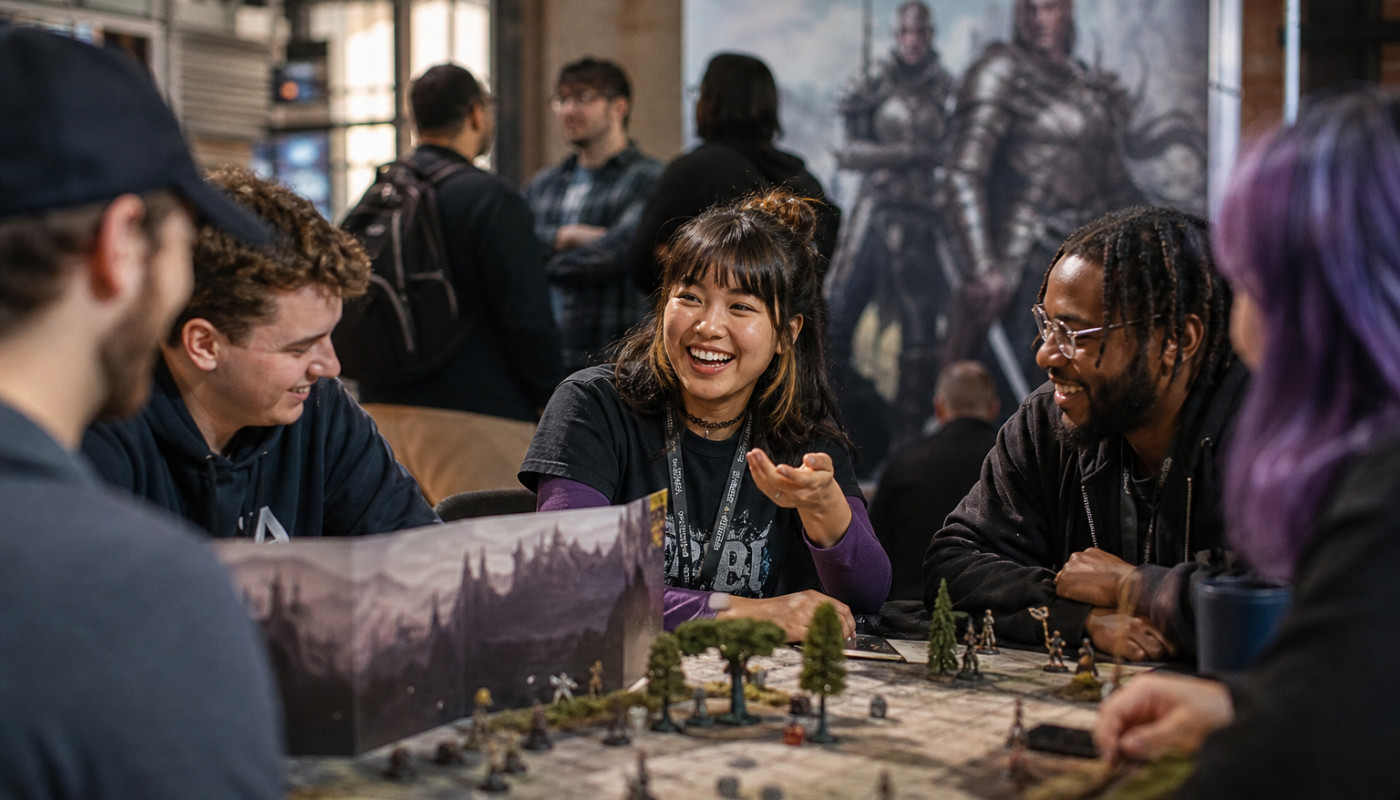
Local organization tends to follow the same pattern. A new in-game event drops, a Discord server spins up a “looking for group” channel, and the most committed members start asking the next logistical question: where are we watching, and who is coming? This is how “online-only” participation quietly becomes a reason to meet strangers in a city, because the event provides a safe script. You do not need a perfect icebreaker when everyone is arguing about the same patch notes, the same storyline twist, or the same last-minute objective that decided a match.
Games now double as cultural venues
Is this entertainment, or is it infrastructure? Increasingly, it is both. Fortnite’s concerts, Roblox brand activations, and Riot’s cross-media projects show how publishers are building stages that can host music, cinema trailers, fashion collaborations, and charity drives. In practice, the game client becomes a ticketing platform, a broadcast channel, and a themed public square, all rolled into one, and it reaches audiences that traditional venues struggle to capture at scale.
The business logic is straightforward. Newzoo has repeatedly estimated the global games market at well over $180 billion in annual revenue in the early 2020s, with monetization driven not just by sales but also by live-service spending. Events are fuel for that model: they bring lapsed players back, concentrate attention, and make cosmetic items feel meaningful because they are attached to a memory. Yet the cultural logic is what turns that revenue machine into a community machine. Events create a sense of “we were there,” and that feeling travels outside the game through clips, memes, and retellings, the same way a music festival or a derby match lives on in conversation long after the gates close.
For players, the venue effect also changes identity. Wearing a limited skin, flexing an event-only emote, or referencing a moment that newer players never saw functions like a wristband from a past concert. It signals belonging, and that signal is legible in real life, at a university society fair, in a café queue near a tournament, or at a comic convention where strangers recognize each other’s fandom. The social capital is not theoretical; it is exchanged in meetups, in shared fandom spaces, and in the friendships that form when a game becomes the common language.
From Discord to cafés: the offline spillover
Communities do not leap from screen to street by accident. They need repeat contact, shared tasks, and a reason to keep showing up, and modern in-game events are designed to provide exactly that. Limited-time quests push squads to coordinate schedules, seasonal ladders create weekly rhythms, and collaborative goals encourage players to recruit friends who might not otherwise log in. Over time, those routines become social commitments, and the platform that hosts them is no longer just a game, it is a calendar.
The pandemic years accelerated this normalization. Fortnite’s 2020 concert was not simply a novelty; it arrived when physical venues were shuttered, and it demonstrated that “going out” could be simulated in a way that still felt communal. As restrictions eased, that habit did not disappear. It evolved. Online coordination remained, but meetups returned in hybrid form: watch parties for finals, LAN nights in rented spaces, and casual gatherings where the game is on a TV but the real point is conversation.
This is where tools and guides become practical, because players are not just consuming events, they are organizing around them. If you are following major League of Legends moments, tracking schedules, or comparing game modes, a dedicated hub can make planning easier, and the important link can serve as a useful reference point when groups are deciding what to play, when to tune in, or how to frame the next meetup. The community effect often hinges on small frictions, finding the right information quickly, agreeing on a time window, and making sure newcomers feel included, and reducing those frictions is what turns enthusiasm into attendance.
Offline spillover also shows up in institutions. Schools and universities have built esports societies, some with dedicated facilities, because students arrive with pre-existing communities formed through live-service games. Meanwhile, cities with strong competitive scenes see recurring local tournaments, sponsor-backed viewing events, and café ecosystems that mirror older cultures built around football, chess, or trading cards. The common denominator is ritual: in-game events provide the story beats, and the community provides the room.
What makes an event community-proof
Not every event creates a lasting crowd, so what separates a fleeting gimmick from a true community catalyst? First, the event must be legible. Players need to understand what is happening, when it is happening, and why it matters, otherwise the experience stays individual. Second, it must be shareable. Spectacle helps, but clarity matters more, a dramatic reveal, a final boss, a synchronized concert beat, because these moments become clips and quotes that circulate. Third, it must reward participation without punishing absence too harshly, or the community turns into a gated club that newcomers cannot enter.
Publishers have learned these lessons in real time. Run an event that is too grindy, and burnout follows. Run one that is too exclusive, and the audience fractures into “haves” and “have-nots.” Run one that is too confusing, and the conversation dies before it starts. The most successful live-service games now treat events like editorial products, with pacing, narrative hooks, and clear calls to action, and they often pair them with out-of-game communication: social posts, patch notes, developer updates, and influencer coverage that functions like a media ecosystem.
There is also a broader implication. In-game events are training a generation in new forms of civic behavior, organizing, moderating, fundraising, and supporting peers, because large communities require rules and caretakers. The healthiest scenes are the ones where volunteer moderators, tournament organizers, and community leaders set norms that make offline meetups feel safe. That social layer is easy to miss if you only look at player counts, but it is the layer that determines whether a community grows up or burns out.
Planning the next meetup, without overspending
Start with the calendar, pick the event, lock a time, and choose a venue that fits the group. For a watch party, a living room and a shared stream may be enough; for a bigger gathering, cafés and gaming bars often accept reservations on quieter weeknights, and some offer group rates if you book stations in advance. Budget realistically, set a cap per person for food and drinks, and keep one low-cost option so newcomers are not priced out.
Similar

From Casual Bets To Risky Habits: Detecting Early Signs Of Gambling Addiction
The Hidden Psychology Behind Chasing Casino Welcome Bonuses

Exploring The Essentials Of Modern Fire Safety Equipment
Exploring The Tech Behind Seamless Online Casino Experiences
Is The High RTP In Chicken-themed Slots Indicative Of Better Payouts?

Strategies For Overcoming Challenges In Regional Network Expansion

Exploring The Psychology Behind Mini-Game Addiction?

Unlocking The Secrets Of Crash Games: Strategies For Higher Returns
Exploring The Benefits Of White Label Casino Platforms